What “issued” usually includes
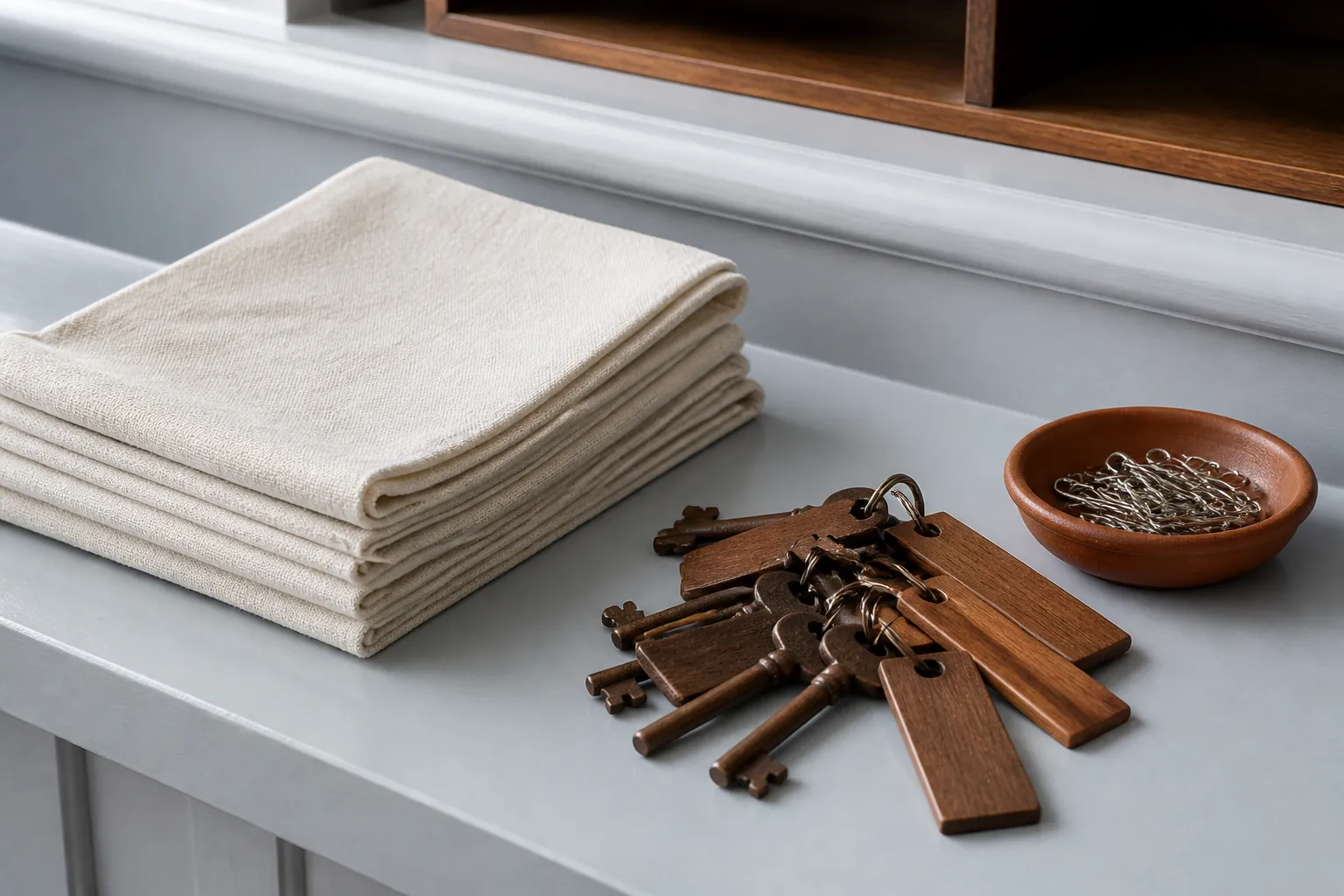
Most desks work from a short kit. You get a key or wristband, sometimes a towel, sometimes a thin cloth, occasionally a plastic bag for wet items. None of these objects explains itself. The key opens a locker; it does not tell you whether shoes stay outside the wet zone. The towel dries you; it does not replace footwear on slick stone. The cloth may be for sitting, walking, or the water—three different jobs that look identical when folded.
I keep a working list of items that appear often enough to plan around, and a second list of assumptions that fail house to house. The first list helps you travel light. The second list stops you from treating one counter’s kit as a universal standard.
Common handovers
- Numbered key, band, or token tied to one locker.
- Cotton or linen towel for drying after the water.
- Thin house cloth that may or may not enter the pool.
- Hair tie, pin, or small amenity offered only if you ask.
If the desk slides something toward you without naming it, ask what it is for before you invent a use. Invented uses are how visitors wrap the wrong cloth around their shoulders and walk into a quiet hall looking theatrical.
An issued towel is a gift and a boundary: it covers one need and quietly refuses to cover the rest.
What the desk rarely explains
Sandals are the classic omission. Many houses issue towels and still expect you to keep soles off wet floors or off certain rooms. Soap and shampoo may be at the wash row or not present at all. Lockers may need a coin return even when a key is free. Hair dryers may sit in a side room that is easy to miss when you are focused on the water.
Storage of valuables is another quiet gap. A locker is not always waterproof, and a wristband is not always secure. Ask where phones must stay. Ask whether the issued bag is for wet cloths or for street shoes. Small answers prevent large awkwardness later.
A packing order that respects the counter
- Confirm what the desk issues before you fill a bag with duplicates.
- Bring only what the house will not provide: usually sandals, a hair tie, and any medical need you trust yourself with.
- Leave “just in case” towels at home unless the desk says nothing is issued.
- At the counter, name each object you receive and ask its job in one short question.
Overpacking marks you as someone who did not check. Underpacking is fine if you are willing to ask. The middle path is a short list verified at the door, not a suitcase built from fear of inconvenience.
When two houses issue different kits
Neighboring halls can reverse the kit on the same street. One hands you a sitting cloth and expects your own swimsuit. Another issues fabric for the water and frowns at anything you brought. Do not copy yesterday’s counter onto today’s. Write the answer down if you are briefing someone else. At ichthyost, we treat issued kits as house-specific facts, not as style tips.
Before you leave the desk
Take five seconds with the objects in your hands. Know which locker number you hold. Know whether the cloth enters the water. Know where wet items return. Then walk. The desk has done its part when the kit is clear. The rest of the hour depends on the sequence you follow after the counter, not on how many extras you carried through the door.