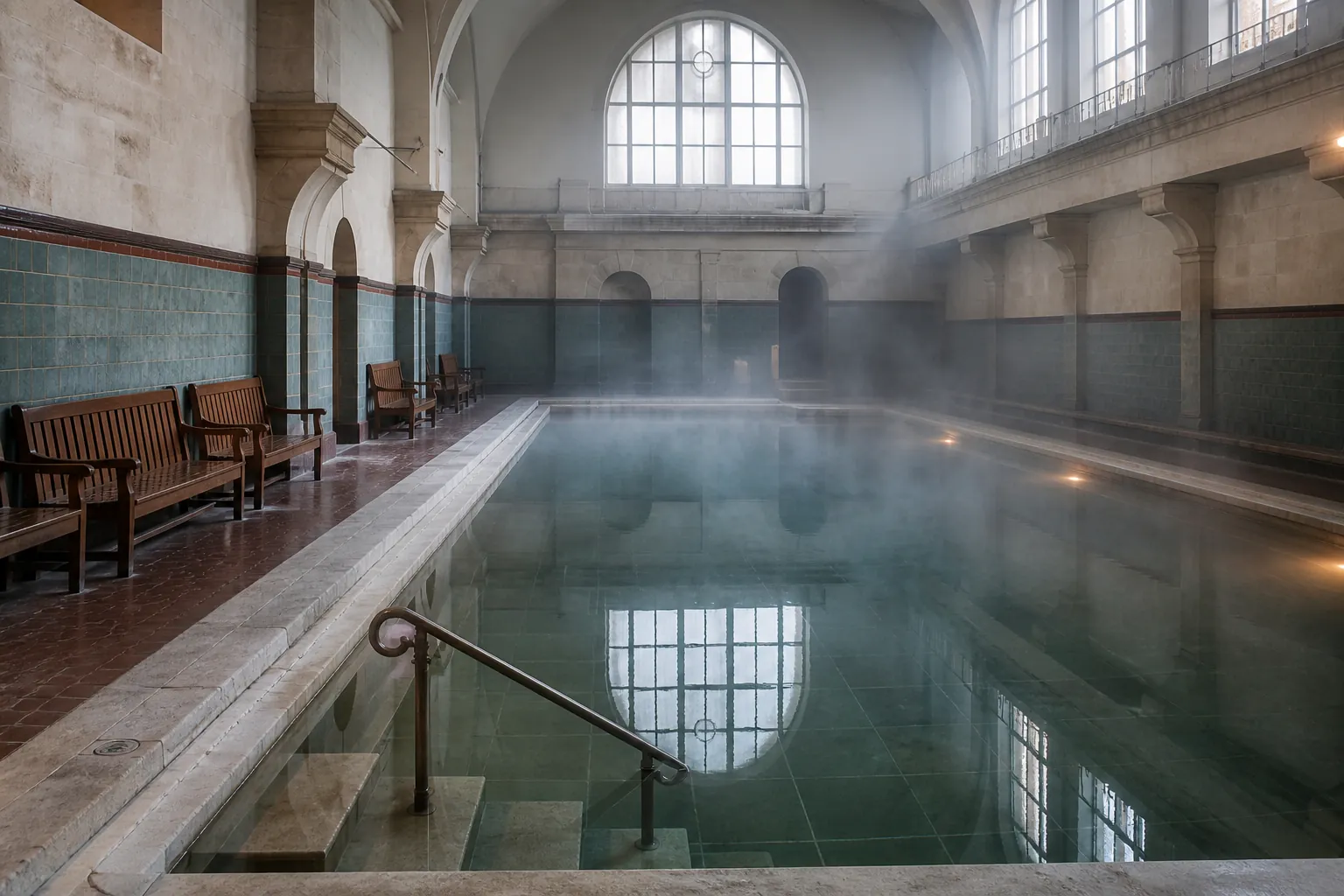
Wide indoor thermal hall at early morning, still water in a rectangular stone pool reflecting clerestory windows, light steam above the surface, empty wooden benches along the left wall, pale limestone and muted teal tiles, no people in the frame, 1920x1080

ichthyost — Bathhouses and Public Baths: How to Walk In Where Everyone Has Their Own Rules, and Break None of Them

The difficult part of a visit is rarely the water. It is the order of small actions that regulars treat as obvious and almost never explain.

We write about public baths, thermal halls, and neighborhood bathhouses as everyday rooms, not as a line on a sightseeing list. Streets and exhibitions show what a place wants you to notice. These houses show how people share heat, benches, and silence with strangers. ichthyost turns trip notes into briefings and personal consultations for this part of a route.

What a museum will not show you

A public bath is one of the few rooms on a trip where you watch ordinary manners at close range, without a caption on the wall.

People decide, in real time, how close to sit, whether to nod, and how long to stay in the hottest room. You see where eyes go and where they do not. You hear whether the house is a quiet interval or a meeting place that happens to have water. None of that is staged for visitors, which is exactly why it is easy to misread.

We do not treat the visit as a wellness appointment, and we do not assign qualities to the water. Heat is heat. Crowds are crowds. A locker room at peak hour can mean a queue, wet floors, and not a single free hook. The value of going is cultural and practical: you learn how this place handles shared space, and you learn how not to become the person who breaks the rhythm.

That is why the notes on ichthyost spend more time on doors, stools, and towels than on scenery. If you understand the social grain of the house, the rest of the hour is easier to inhabit. If you skip that layer, the first thirty minutes feel like getting lost in a building with no signs.

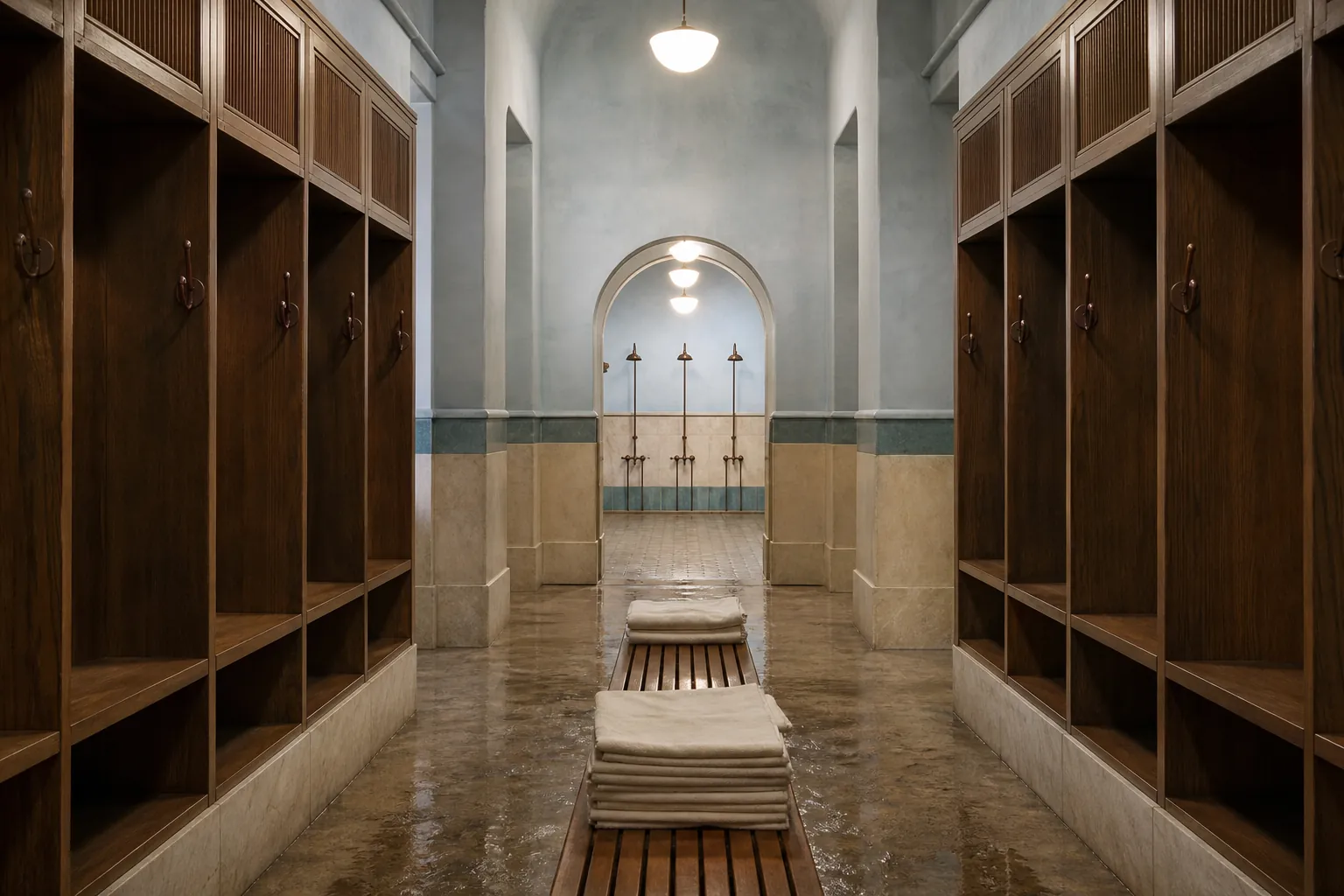
Long changing-room corridor with two rows of open wooden lockers, folded cotton towels on a slatted bench, a row of shower taps visible through an arch at the far end, warm overhead lamps, wet stone floor shining, 1600x1000

City houses, thermal halls, and quieter countryside rooms

Three kinds of places can share a pool of water and still disagree about almost every step around it.

Neighborhood bathhouses

Smaller urban houses often run on habit. Regulars move through washing, soaking, and rest without looking up. Tickets may be simple, benches may be tight, and talking can be normal or almost absent depending on the hour. The building is part of the street, not a destination pavilion, so the welcome is rarely theatrical.

Large thermal complexes

Bigger halls add routes: indoor pools, outdoor basins, rest rooms, and a locker system that can take ten minutes to understand. Signage exists, yet the unwritten layer remains. Staff will tell you where to change. They will not always tell you that people frown at phones even in corridors, or that the hottest room is used in short turns.

Countryside soaking houses

Out-of-town houses can feel slower and still be strict. You may be issued a cloth, a key, and a stool, then expected to know what each is for. The quiet can be deeper. The clothing rule can be the opposite of the city house you visited that morning. Distance from the center does not mean the sequence is looser.

Field notes in numbers

These figures describe editorial work, not a scoreboard. They are the volume of houses, briefings, and comparisons behind the pages you read.

32

Public baths and thermal halls documented in trip notebooks.

18

First-visit briefings written for readers preparing a single house.

9

Side-by-side notes comparing urban houses with countryside halls.

3

Editors who visit these rooms while traveling and write from the floor, not the brochure.

The sequence nobody recites out loud

Locals learned the order as children. Visitors are judged on it more than on how long they stay in the water.

  1. Ask about clothing before you travel

    Neighboring houses can require a full swimsuit, a house cloth, or no fabric in the water at all. The difference is not a hint you can guess from the facade. Write, call, or read the house notice. Do not copy the rule from the last place you liked.

  2. Pack light on purpose

    Many houses issue a towel, a key, and sometimes a small cloth. Bringing a full kit can mark you as someone who did not check. Bring sandals if floors are wet, a hair tie if you need one, and leave the rest until you know what is handed over at reception.

  3. Wash before you enter the water

    This is the step watched most closely. Sit, wash, rinse, then walk to the pool or the hot room. Skipping it is not a small mistake. It is the one action that tells everyone you have not understood the house.

  4. Decide silence from the threshold

    Some halls are conversational; others treat speech as a disturbance. You can usually tell within a minute: voices either carry between benches or they do not. Match the volume you hear. Do not be the first person to start a tour commentary.

  5. Watch the heat yourself

    Turns in the hottest rooms are short. Resting rooms exist for a reason. Nobody will tap your shoulder when you have stayed too long. Build your own rhythm of enter, sit, leave, cool down. If the heat is more than you expected, that is information, not a challenge.

  6. Leave the phone in the locker

    Cameras are almost always unwelcome, even when a sign is missing. These are rooms where people are unguarded. Do not argue the point. If you need the time, ask at the desk on the way in, then follow the answer you are given.

  7. Choose a calmer house the first time

    A smaller neighborhood bath or a mid-morning slot in a large complex is kinder than a famous hall at peak hour. Go once with the only goal of finishing the sequence without rushing. The water will still be there on a later visit, when you already know where to put your shoes.

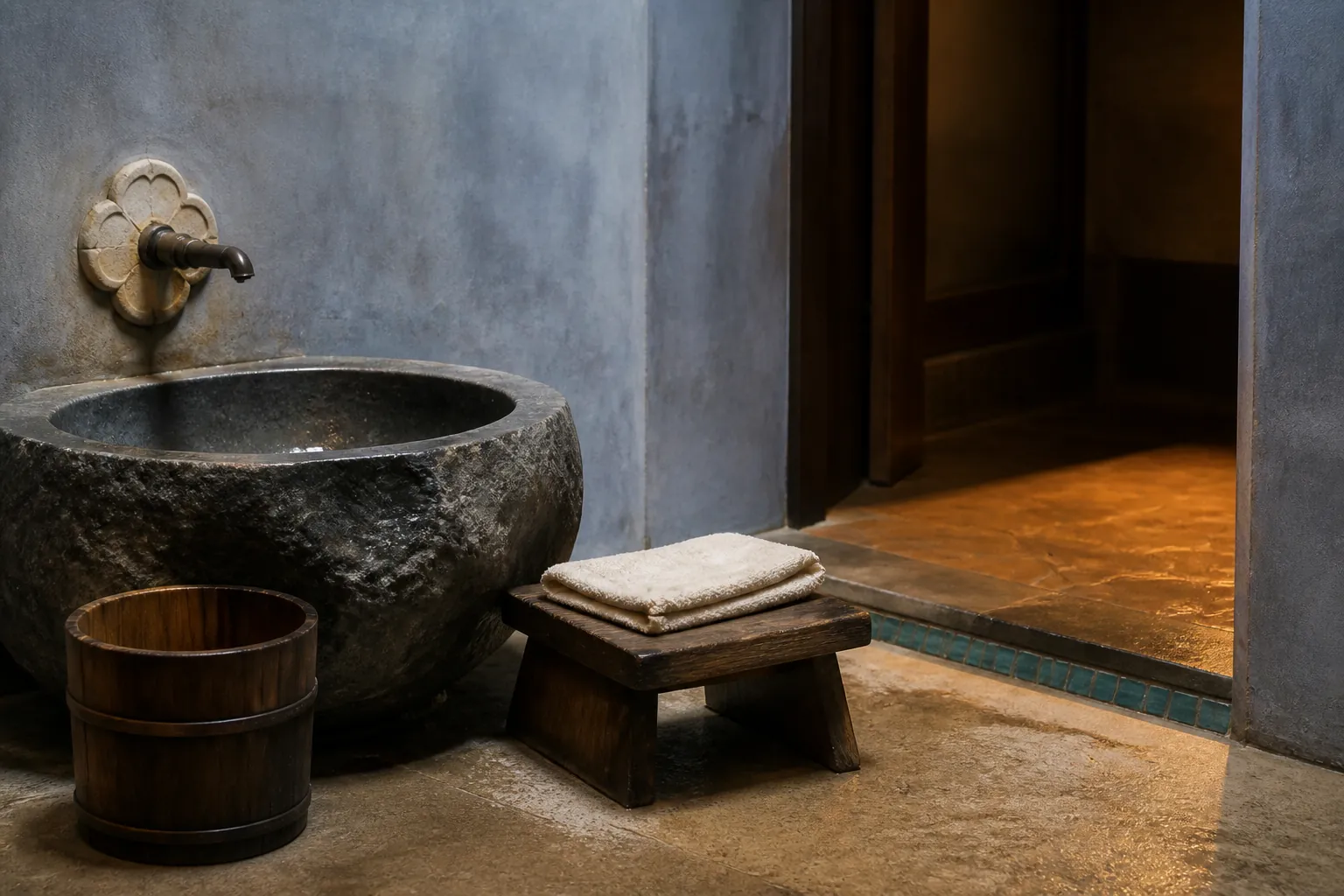
Close view of a dark stone washbasin and a low wooden stool beside a bathhouse entrance, a small wooden bucket, a neatly folded cloth, water droplets on the stone, warm side light, no people, 1600x1000

Who writes the notes

Three editors visit these houses while traveling, then turn the messy parts into briefings you can use before you pack.

Elena Voss, 400x400

Elena Voss

Field editor

Certificate in Cultural Travel Interpretation, North Pacific Visitor Institute

Elena records how people actually move through a house: where queues form, which door is the real entrance, and which rule is enforced with a look rather than a sign. She drafts the sequence notes that later become first-visit briefings.

Marcus Hale, 400x400

Marcus Hale

Route consultant

Accredited Trip Briefing Specialist, Continental Route Guild

Marcus matches a traveler’s comfort with crowds, heat, and clothing rules to a house that will not overwhelm a first visit. He also checks opening patterns and what is issued at the desk so the packing list stays short.

Naomi Reyes, 400x400

Naomi Reyes

Editorial researcher

Visitor Studies diploma, Harbor Editorial Workshop

Naomi compares house notices, guest reports, and our own floor notes. She flags when two neighboring halls disagree about fabric, phones, or talking, and she keeps the published checklists aligned with what we last verified.

From people who already walked in

These notes come from readers who asked for a briefing, then wrote back after the visit. They are individual accounts, not a promise that your hour will look the same.

I treated the bath like a gallery visit and walked straight toward the water. Elena’s briefing stopped me at the stools. Washing first felt fussy until I saw every regular do it without thinking. The rest of the hour made sense only after that one step.

Two complexes on the same trip posted opposite clothing rules. I would have copied the first house and arrived wrong. Marcus had me write both desks before we left. The second answer was the reverse of the first, exactly as the notes had warned.

I am used to being told when to move. In the hottest room nobody cues you. The briefing said to watch the clock myself and to leave the phone in the locker without a discussion. Doing both kept me from becoming the awkward guest I was afraid of being.

Ask us before you pack

If a public bath is on your route and the house rules are unclear, write to us. We will help you sort clothing, timing, and a first house that matches how ready you actually are — not how ready a brochure assumes you are.

Request a Consultation

What we stand for

ichthyost exists to make the unwritten order of baths and thermal halls readable before you walk in. We visit, we compare notes, and we brief travelers who would rather be careful guests than conspicuous ones.

Contact Us

How to read this site

ichthyost publishes information about public baths, thermal complexes, and bathhouse customs so travelers can prepare for the social and practical side of a visit. The materials on these pages are meant to introduce our consulting work and to share field notes from houses we have entered. They describe observed practice. They are not a booking desk, not a medical service, and not a substitute for advice from qualified health professionals.

Questions about your own health, heat tolerance, skin conditions, pregnancy, or whether a visit is appropriate for you belong with a clinician you trust. We do not attribute properties to the water, and we do not present a soak as treatment, recovery, or a guaranteed outcome of any kind. If you feel unwell in the heat, leave the room and seek appropriate care.

Houses change between trips. Opening hours, locker systems, towel service, construction, clothing notices, and what is issued at the door can shift without a public announcement that reaches visitors. Confirm the current details with the house itself before you go. Our notes are a starting brief, not a live operations board.

You decide how to travel. ichthyost is not responsible for choices you make after reading these pages, including which house you enter, how long you stay in the heat, what you wear, or how you interpret a local custom. If a staff member gives you an instruction that differs from something you read here, follow the person in the room.